According to the General Statistics Office, 15.5 percent of students age 5-18 leave school early.
Economics, cultural bias, and gender discrimination often exclude girls from educational opportunities in the developing world. Yet, it is widely acknowledged that educating girls is the most powerful and effective way to address global poverty – and the single best investment one can make. When children, especially girls, learn, their families, communities, and societies all benefit. Educating girls is causally linked to positive outcomes, including:
- Lower infant mortality rates
- Increased wages
- Increased probability of educating the next generation
- Improved family health
- Success in combating the spread of preventable diseases
- Improvement of general economic development
Despite these known benefits, girls are less likely than boys to attend school; and those girls fortunate enough to enrol are likely to drop out when transitioning from primary to secondary school.
Programmes
1- Teaching Facility (Dong Nai Province)
Beneficiaries: street children typically with no papers, therefore invisible.
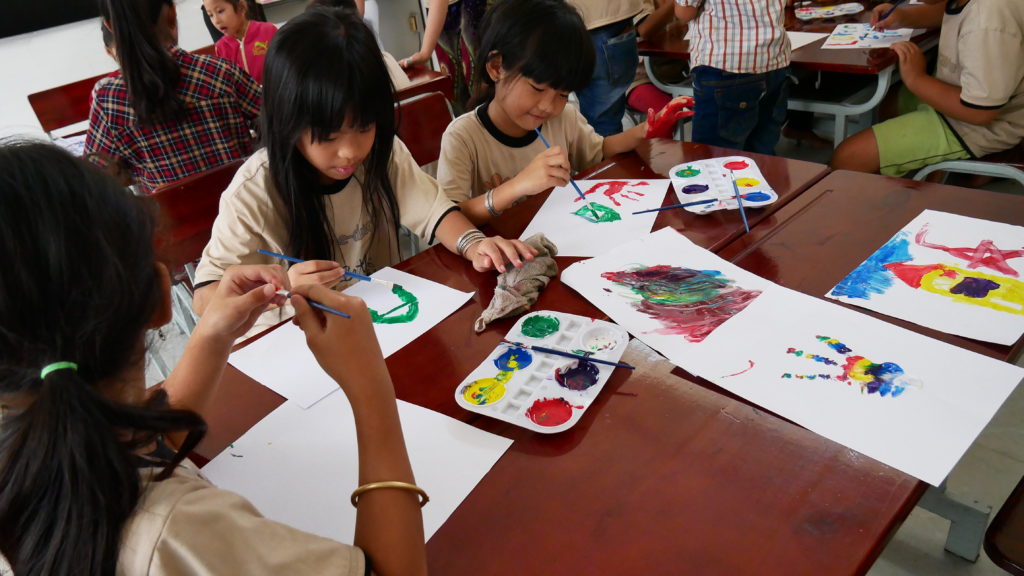
- We have teamed up with local teachers to provide a place where more than 50 children can now get an education. We also help them to improve their living conditions, healthcare, support, food, and other basic requirements.
- Most of the children we support in our facilities have no chance to go to public school for several reasons, however for those that can attend public school we support them to onboard and everything they need.
- These children typically have no papers therefore cannot attend higher education. Hence, once they reach the school age, we help them to onboard on vocational programmes where they can achieve professional skills and have a place in society.
- After a cycle of elementary preparation, we help them to pursue their dream job with vocational training.
- Working with the families, we have the opportunity to enrol younger siblings in primary school.
2- Public school enrolment
Beneficiaries: Children from families financially challenged.
Working with the local government, we provide financial help, healthcare, and on a case by case additional support to their families.
3- Community Learning Centre
Beneficiaries: Children from rural remote areas.
Along with local organisations, we are creating a Community Learning Centre offering educational support with a focus on English and intercultural skills to help young people to be ready for future quality employment.