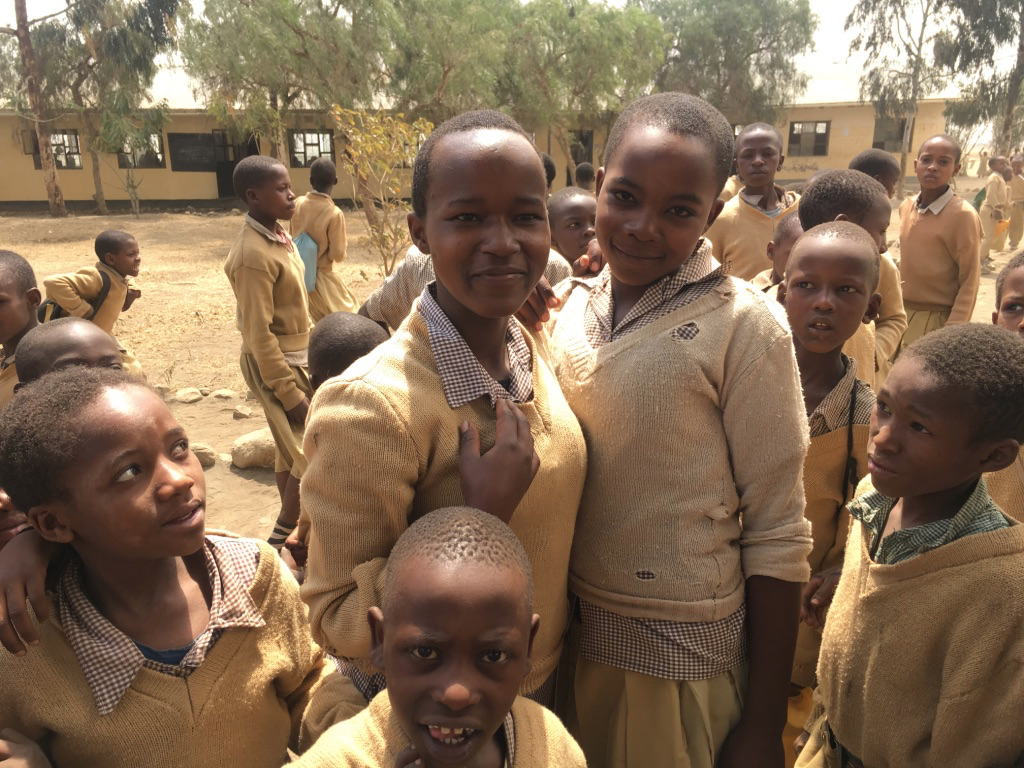
It is estimated that 5.1 million children between the ages of 7 and 17 are not in school (circa 9% of the overall population). Many Tanzanian children do not experience a secondary education or vocational training. This leads to many children accepting jobs in hazardous conditions. 29.3% of children between the ages of 5 and 14 work in unsafe conditions in fields such as mining, quarrying and domestic work.
An estimated 29% of students still live in households below the poverty line. In addition to school fees, parents must pay for uniforms, books and possibly transportation.
Adolescent girls in Tanzania are least likely to receive a secondary education. Research estimates that 2 out of 5 girls marry before the age of 18. Within the population of married, secondary-school age girls, 97% are not in school due to marriage or pregnancy.
35% of the country’s population is chronically undernourished. For rural areas, this figure is even higher. Thousands of people live in mud huts or shacks where regular access to potable water is often nothing but wishful thinking.
An estimated more than 1,500,000 children are orphans most of them due to HIV. They have lost either one or both of their parents because of the disease. Due to AIDS, the number of child-headed households has increased significantly in recent years. Growing up without a family or in a dysfunctional family environment, often has serious implications on a child’s mental and physical development. Many orphaned children experience neglect and discrimination. Children who grow up without parental care often do not attend school.
Programmes
1- Karim Orphanage
Beneficiaries: Orphans and children from the neighbourhood
The orphanage located in Arusha (Tanzania) is home to 25 children. It operates also as a day-care centre for an increasing number of children from the neighbourhood, as their parents are financially challenged, and they wouldn’t know how to manage their daily working routine, while they need to take care of their children. In 2019, along with general support, we built a fence wall, as this has been requested by the government for the safety and security of the children hosted in the orphanage.
We are now starting a long-distance adoption programme to better support their education and well-being of children.
2- Lengiloriti Primary School
Beneficiaries: Children from 7 Maasai tribes in Tanzania
Built, in the middle of a large, remote area in Tanzania home to 7 Maasai tribes, communities, and families (approx. 20,000 people), the school, which has been certified by the government, has opened its doors on January 14th, 2019. The educational centre consists of 7 classrooms, a toilet facility and teachers houses, serving ca 560 children. Before the school, there were no options for them to learn.
- The children are attending and learning every day. Some of them have to walk every day more than 12 km, each way, to get to school. For this reason, we will build two dormitories so they can stay weekdays at school.
- We are also looking for a water project as the community relies on rainwater both for personal hygiene and for drinkable water.