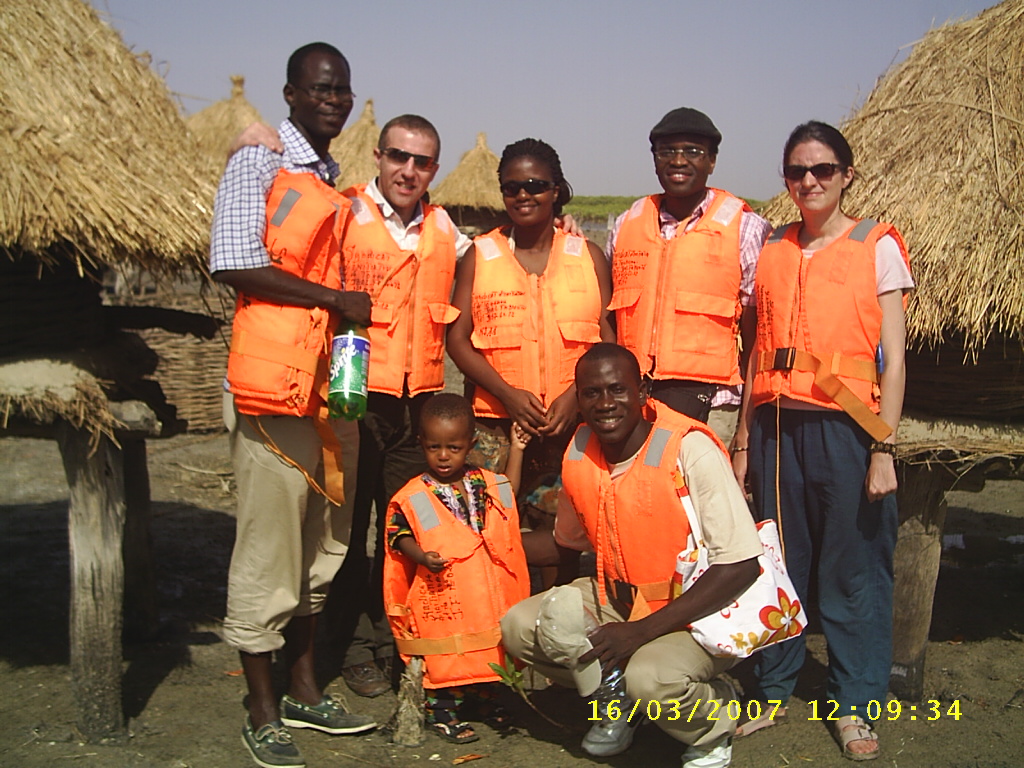
The idea of E-ducare arose in 2007, as a result of its founder’s trip (Pierluigi Coscia) to Senegal (Africa).
Visiting Dakar, accompanied by Wilson, his Rwandese friend, and the local friend Omar, Pier noticed, curiously, a multitude of begging kids aged around 4 to 10 years.
It was not the first time he has seen children begging, but this time something had caught his attention, something those children had in common: their slender bodies, the sadness in their eyes, often driven or mistreated, their bare feet, dirty, a tiny can knot to their neck with a piece of wire, and an outstretched hand begging for a few cents, sugar cubes or biscuits in the name of God.
Omar explained that they were Talibé, students at a local Koranic school.
Talibé, in Arabic means “one who seeks.”
These children usually come from poor families in different regions of Senegal or neighbouring States and are entrusted to a religious teacher, the Marabout, in charge of their religious education. They live in a Daara, the Koranic School. Their day begins at sunrise, with the Morning Prayer and begging for breakfast until 10 (in money or in kind); between 10am and 12.30 pm they study, after which they return to the streets to beg for lunch. Therefore, fall to the Daara for the prayer of the 14.15; they study until 5 pm, have an hour of freedom, say the evening prayer and then return to the streets to beg for dinner, or doing some practical work at the Daara. Depending for all from the Marabout to whom they give the collected alms.
Pier asked if it was possible to visit a Koranic School. Two days later Wilson, Robertine, Omar and himself were greeted by some of the leaders, to whom they asked why children at such a young age were forced into a life, at least to our way of seeing things, so incredibly hard. The meeting was cordial and for each question asked, they received an answer which was precise, punctual, and obviously meaningful from their point of view.
After circa one-hour conversation, they were about to leave. Approaching the exit, while Omar was addressing the children about the importance of studying, Pier noticed something moving in a dark corner.
Pier discovered a chilling reality: children suffering from malaria were resting in the dark. When asked, the leaders explained: “a French lady gives us through an agreement with a local pharmacy everything we need, but at this time the pharmacy ran out of Lariam (a treatment against malaria) and we are waiting for it.
If properly treated malaria is an effective remedy, but too often the therapy is not initiated on time to save lives, especially children. They left enough money to buy medicines from another pharmacy and, with a vice in the throat and accepting that they couldn’t do much more, they returned home.
Despite the beauty of the landscapes and places Pier visited in the following days, he couldn’t turn his thoughts away from that night in the Koranic School.
Unfortunately, the day of departure arrived soon, and with mixed feelings, he returned back to Europe.
Like everyone else, Pier was aware of the existence of extreme poverty, but after having experienced such a story, he was no longer able to return to his “privileged world,” showing with pride to all his friends the amazing pictures he took, and the acceptance of his powerlessness in similar situations. After all, if Heads of State, United Nations and other relevant organisations were incapable, what could he do?
Without any doubt, that trip to Senegal, which had started in the name of a mere vacation, was turning into something more; suddenly his past life, set out to make sense.
Pier was brought up by his parents, with the ethic that others come first, and others matter more than he does. His 10 years in a seminar, and other 10 years of wonderful experience as a volunteer; being spurred on to improving his English, and his move to Ireland, like pieces of a puzzle, everything stuck perfectly. Everything had prepared him for this moment and suddenly all his life made sense to him, including the painful divorce he just went through.
On the way back to Ireland Pier decided that he must have done his part, it would not suffice anymore the little he had done until then. He wanted something more, and if he could help even just a few of those children, it would have been already a great achievement. It was at stake the lives and the future of children, those little ones of which we adults have a responsibility for.
Since his return from Senegal Pier began to involve friends, relatives, colleagues, and the idea has turned into a project. After years of meetings and dozens of books read on the subject, the initial enthusiasm ‘turned into a goal and then in an organisation, which has gone far beyond any expectation.
Values: